





When evaluating new training tools for industrial and logistics workforces, safety is always the first question. We at Daimon have asked ourselves repeatedly: is a wearable exoskeleton genuinely safer for training than conventional methods? The answer, based on our years of developing dexterous manipulation and teleoperation systems, is a conditional yes. The safety advantage depends entirely on how the exoskeleton is designed, how it captures human motion, and how it integrates with robot teleoperations. Let us break down the evidence.
Reducing Physical Strain During Skill Acquisition
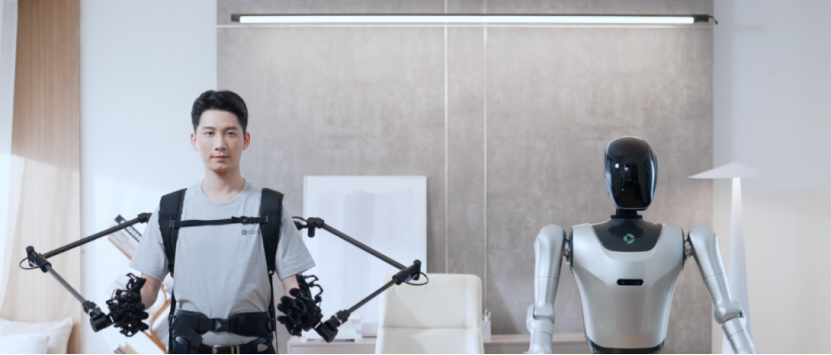
Traditional training for heavy lifting, repetitive assembly, or remote handling often forces trainees into awkward postures or high-risk movements. A well‑designed wearable exoskeleton provides passive or active support to joints and the spine, lowering the chance of strain injuries. From our perspective, this is where safety becomes tangible. Trainees can repeat motions dozens of times without accumulating fatigue, and instructors can intervene before bad postures become habits. However, not all exoskeletons are equal. The true leap in safety comes when the wearable exoskeleton is paired with robot teleoperations—allowing the trainee to control a remote robot while receiving real‑time biomechanical feedback.
How Robot Teleoperations Enhance Training Safety
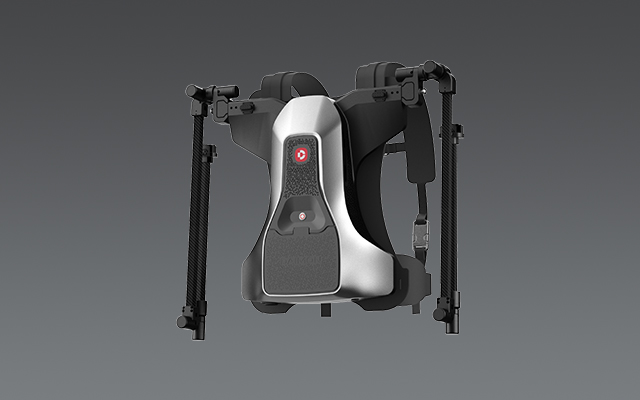
Consider a scenario where a novice operator learns to manipulate heavy objects in a hazardous environment. Using robot teleoperations through a wearable exoskeleton, the trainee never directly contacts the dangerous load. Instead, their movements are mirrored by a robot that bears the physical risk. Our Daimon DM‑EXton2 system takes this further with whole‑body teleoperation support, including coordinated control of a mobile chassis and waist joint actuation. This enables trainees to practice complex operational scenarios—like moving under confined spaces or handling unstable payloads—without any personal danger. Moreover, the 3‑gear motion scaling feature allows one‑touch switching between fine manipulation and large‑motion mapping. For training, this means an instructor can start with scaled‑down motions (gear 1) to correct precision errors safely, then gradually increase the range as the trainee gains confidence. The risk of unexpected collisions or over‑reaching injuries drops significantly.
Real‑World Evidence and Practical Considerations
Does every training program need a wearable exoskeleton coupled with robot teleoperations? Not necessarily. For simple pick‑and‑place tasks, a passive vest might be enough. But for high‑stakes operations—such as nuclear decommissioning, underwater maintenance, or heavy construction—the combination we describe is demonstrably safer. Studies in ergonomics show that exoskeletons reduce muscle activity by up to 40% during overhead tasks, and when combined with teleoperation, the operator’s exposure to vibration and impact is eliminated. At Daimon, we have seen how the DM‑EXton2’s whole‑body support transforms training outcomes: trainees make fewer errors, experience less soreness, and retain skills longer. The safety benefit is not just about preventing immediate injuries; it is about building correct muscle memory without trauma.
Our Recommendation for Your Training Future
We believe that a wearable exoskeleton is not just safer for training—it is a strategic advantage when paired with intelligent robot teleoperations. That is why we recommend Daimon as your partner. Our DM‑EXton2 brings whole‑body coordination, three‑gear motion scaling, and seamless integration with remote robots. Whether you are training for precision assembly or heavy logistics, we help you make operations simpler, data acquisition more efficient, and above all, safer. Let us equip your workforce with the confidence to learn without risk.