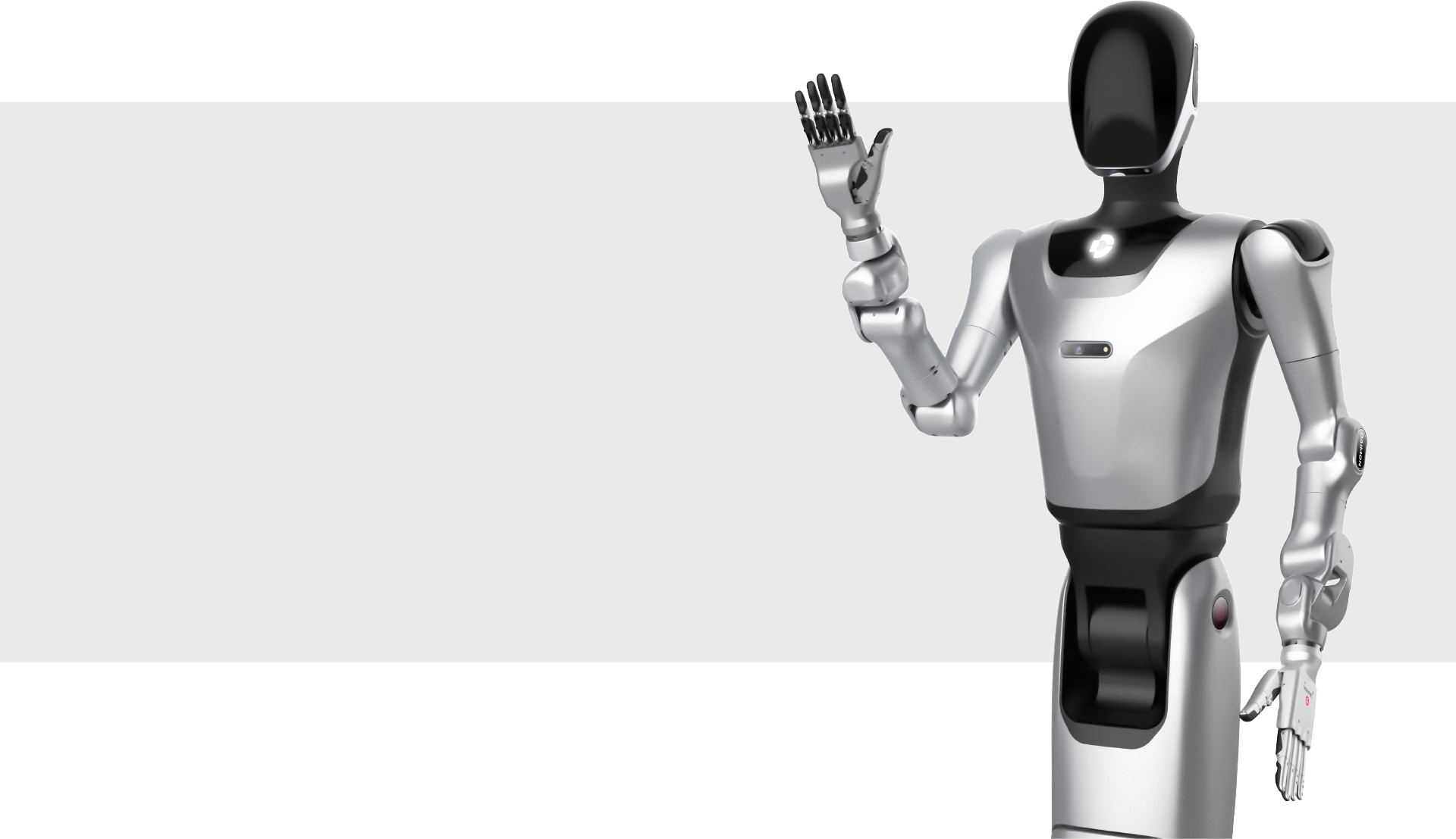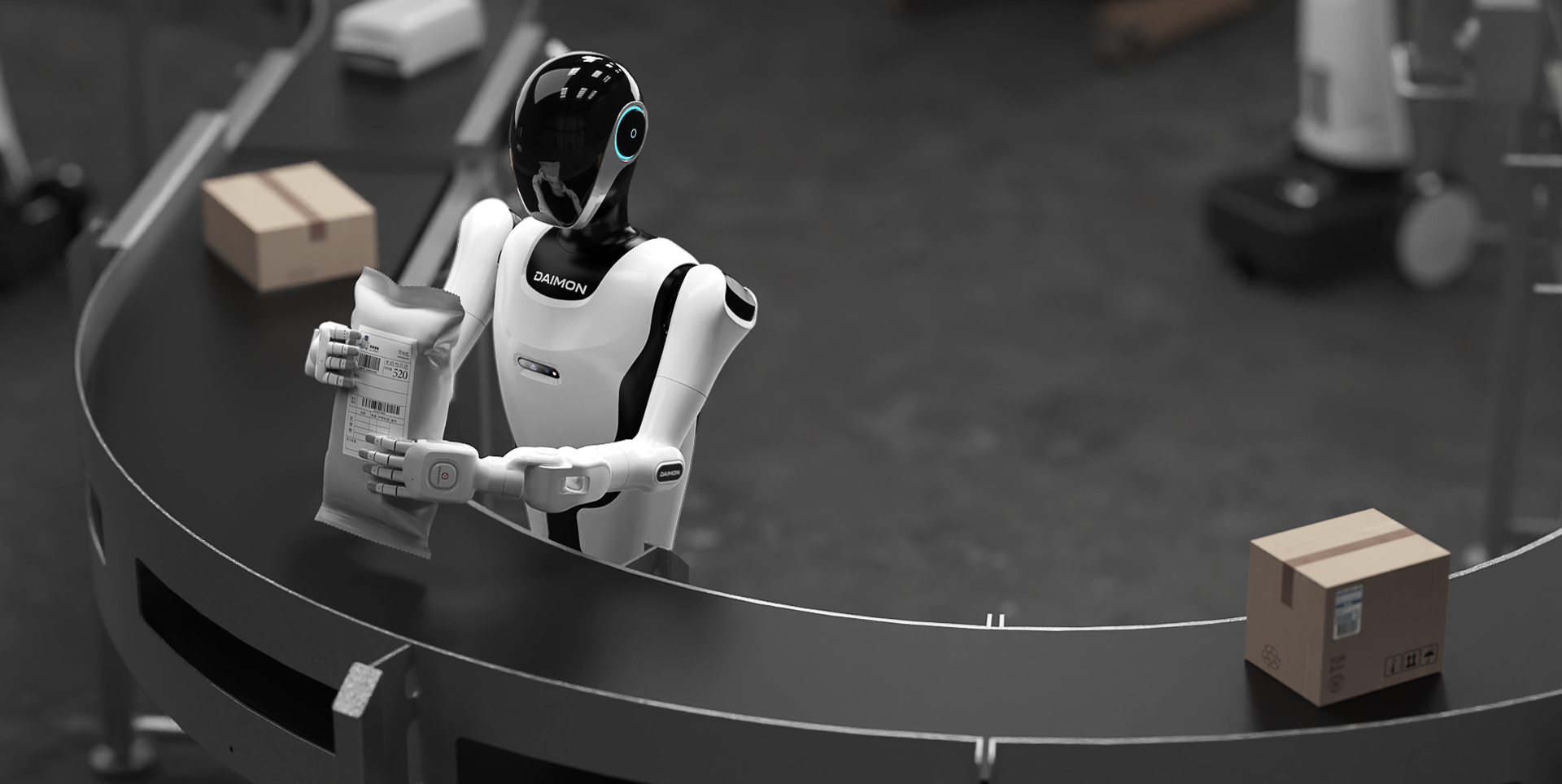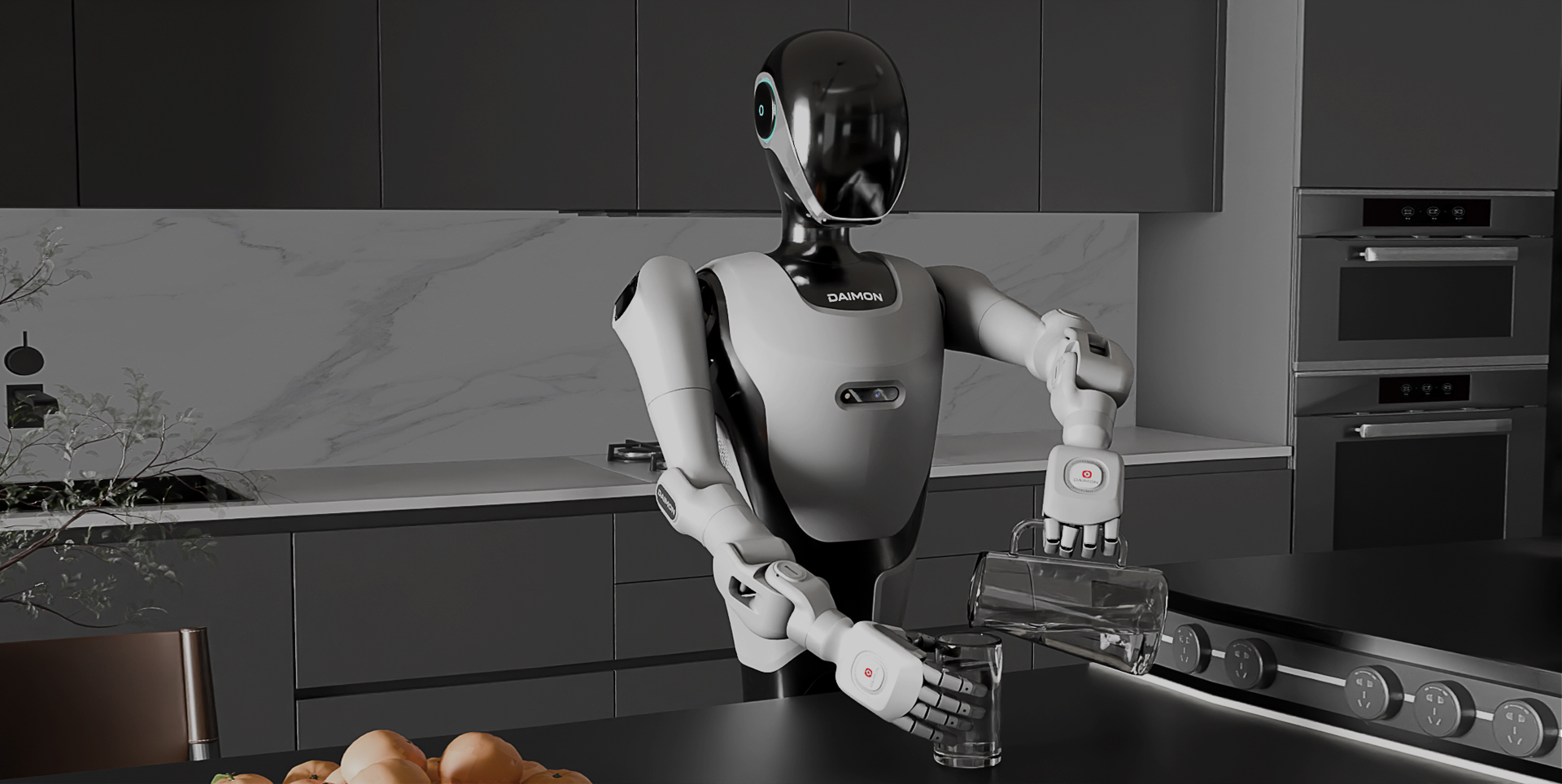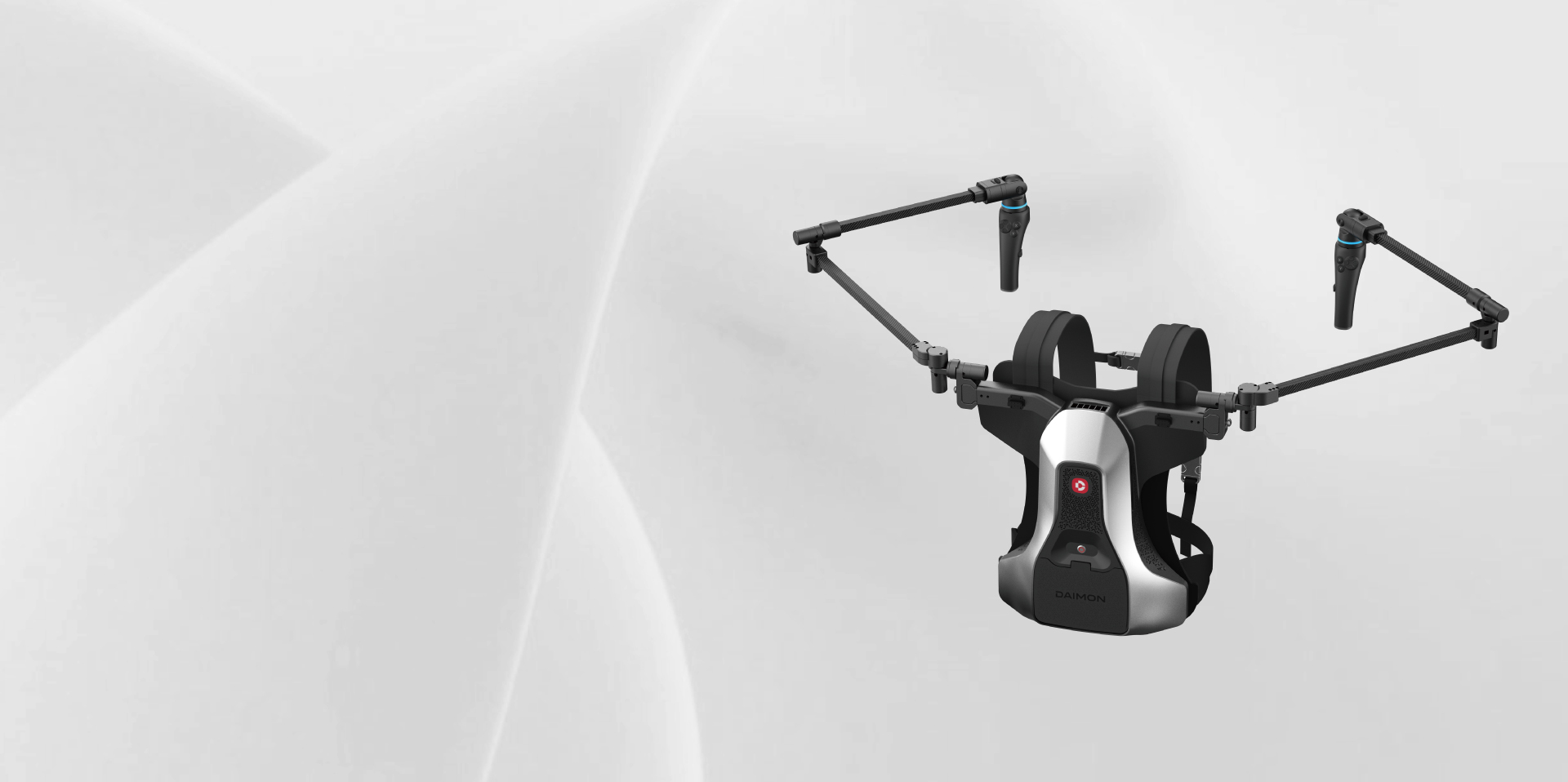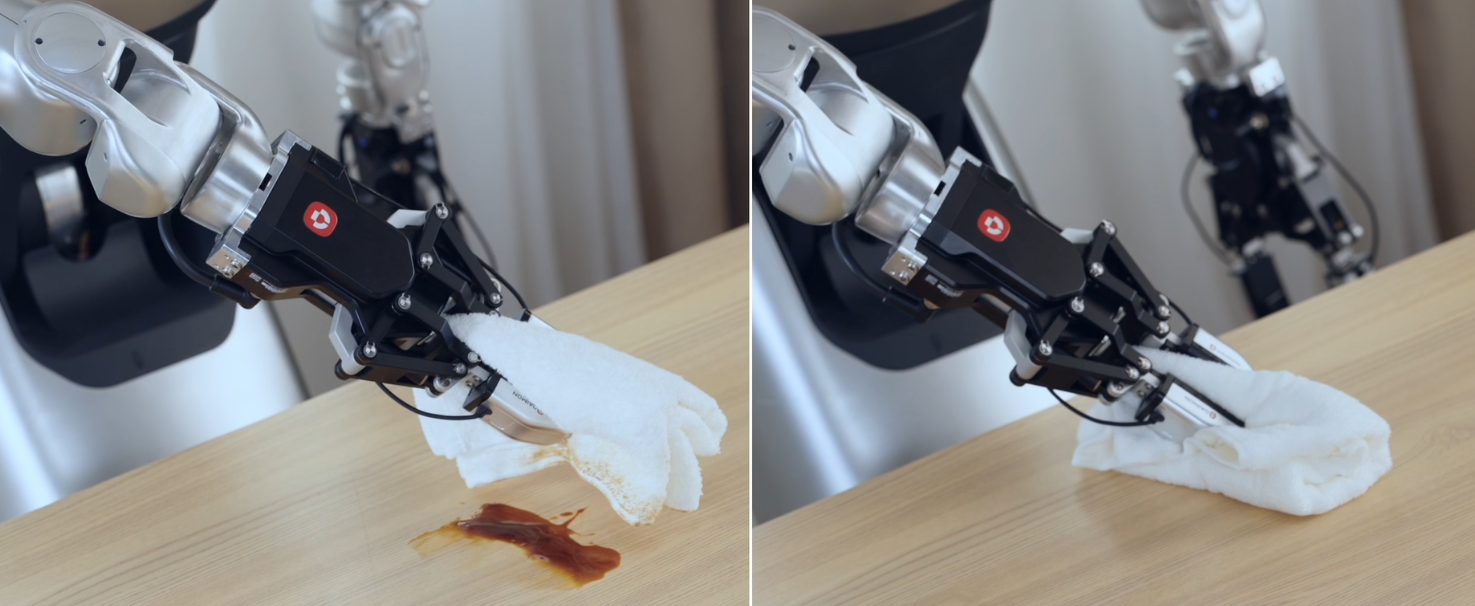
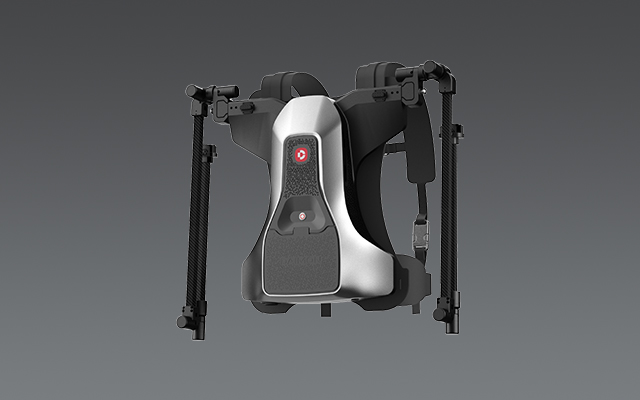






Training humans to control remote robots has traditionally relied on simulated environments and scaled-down mockups. But neither method truly prepares an operator for real-world physics—friction, inertia, unexpected collisions. This gap is where a wearable exoskeleton transforms training. By mirroring the operator’s movements and providing physical feedback, exoskeletons create a direct bridge between human intent and robotic execution. At Daimon, we see this as a powerful application of embodied artificial intelligence: the trainee learns not with abstract commands but through whole-body interaction. And when combined with high-fidelity tactile sensing, the training becomes indistinguishable from real operation.
Building Muscle Memory Through Physical Replay
A wearable exoskeleton records more than joint angles; it captures velocity, torque, and timing. For training, this data becomes a “golden trajectory.” A novice operator can wear the exoskeleton while a master’s recorded movements are replayed through the suit, gently guiding the trainee’s limbs. This haptic teaching method accelerates learning curves dramatically. Moreover, embodied artificial intelligence algorithms can analyze the trainee’s deviations and offer corrective force feedback in real time. Instead of watching a screen, the trainee feels the correct way to insert a connector or lift a fragile sample. We have seen this reduce training time from weeks to days.
Simulating Hazardous Tasks Without Real-World Risk
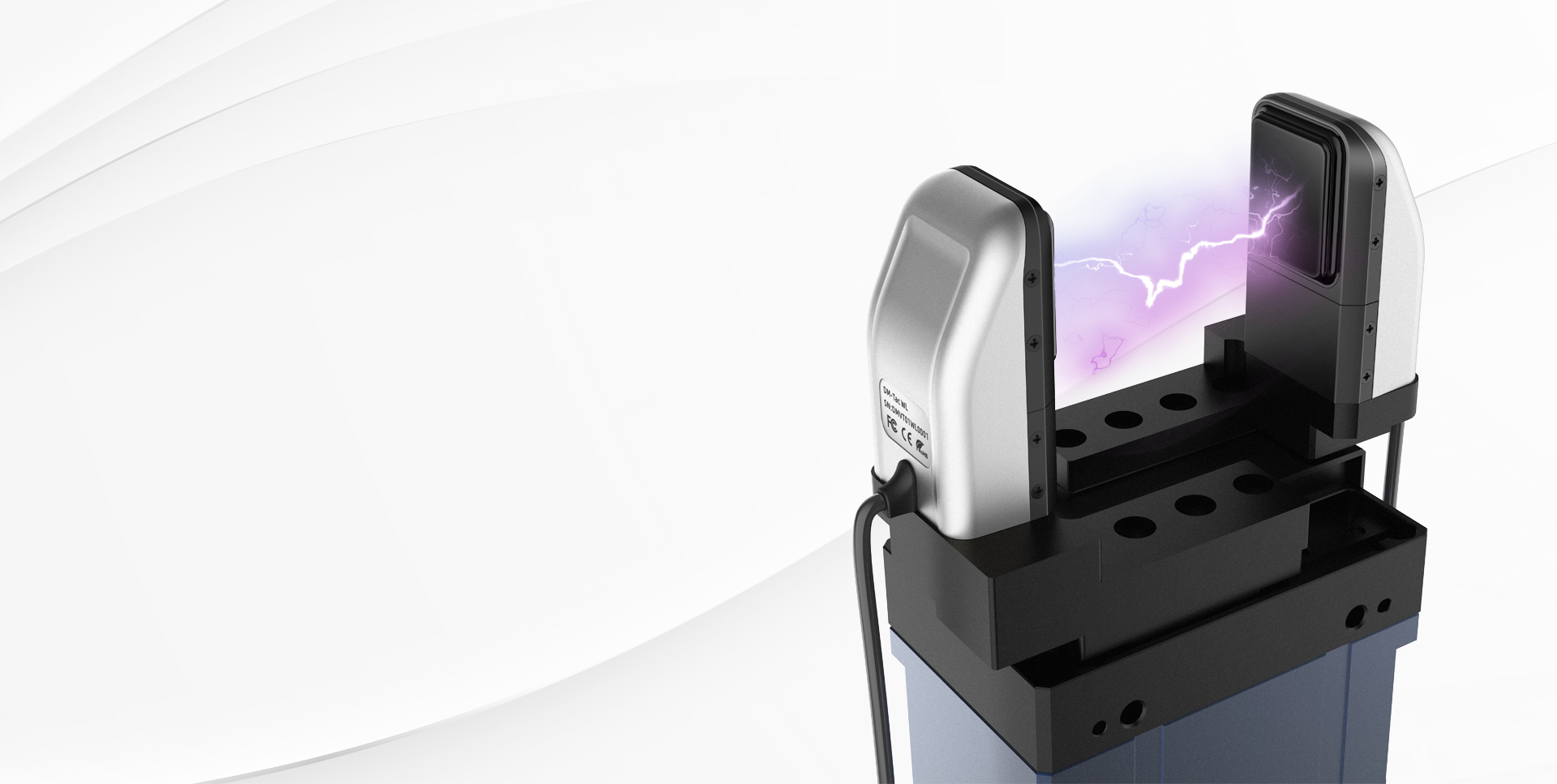
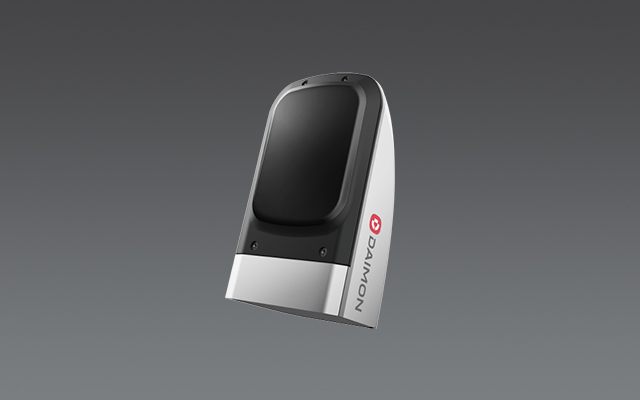
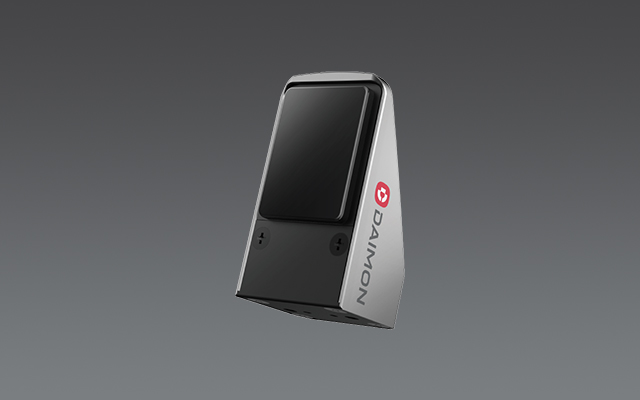
Biochemical laboratories and nuclear facilities demand precision under pressure. Using a wearable exoskeleton, trainees can repeatedly perform dangerous manipulations—handling corrosive reagents or test tubes with unknown contents—while the robot operates in a contained simulation or a safe remote environment. Our tactile solutions at Daimon enhance this by integrating multimodal tactile-visual fusion. The exoskeleton transmits not only motion but also tactile signatures: weight, surface texture, slip. Trainees learn to identify a test tube’s fill level or a sample’s fragility through the suit’s feedback. This is embodied artificial intelligence at work: merging perception, action, and learning into a single closed loop.
Scaling Training Across Teams and Locations
Another advantage of wearable exoskeleton-based training is data efficiency. One expert operator can record a complex experimental procedure—say, repositioning a sensitive microfluidic chip—and that recording becomes an interactive training module for dozens of trainees across different sites. Each trainee wears the exoskeleton and experiences the same forces, timings, and tactile cues. Our laboratory automation work has shown that such standardized physical training can reduce errors. With embodied artificial intelligence models continuously improving the playback fidelity, the gap between simulation and reality shrinks every cycle.
Our Perspective on the Future of Operator Training
As we at Daimon look ahead, wearable exoskeletons will become standard equipment in every robotics training center. But hardware alone is insufficient; true skill transfer requires rich tactile data and intelligent playback. That is why we recommend our brand. We provide cutting-edge tactile solutions that enable intelligent robots—and the humans who train them—to create real, transformative impact. From smart laboratories to industrial maintenance, our multimodal sensing systems make every training session more effective. Let us help you turn your operators into experts, one guided movement at a time.